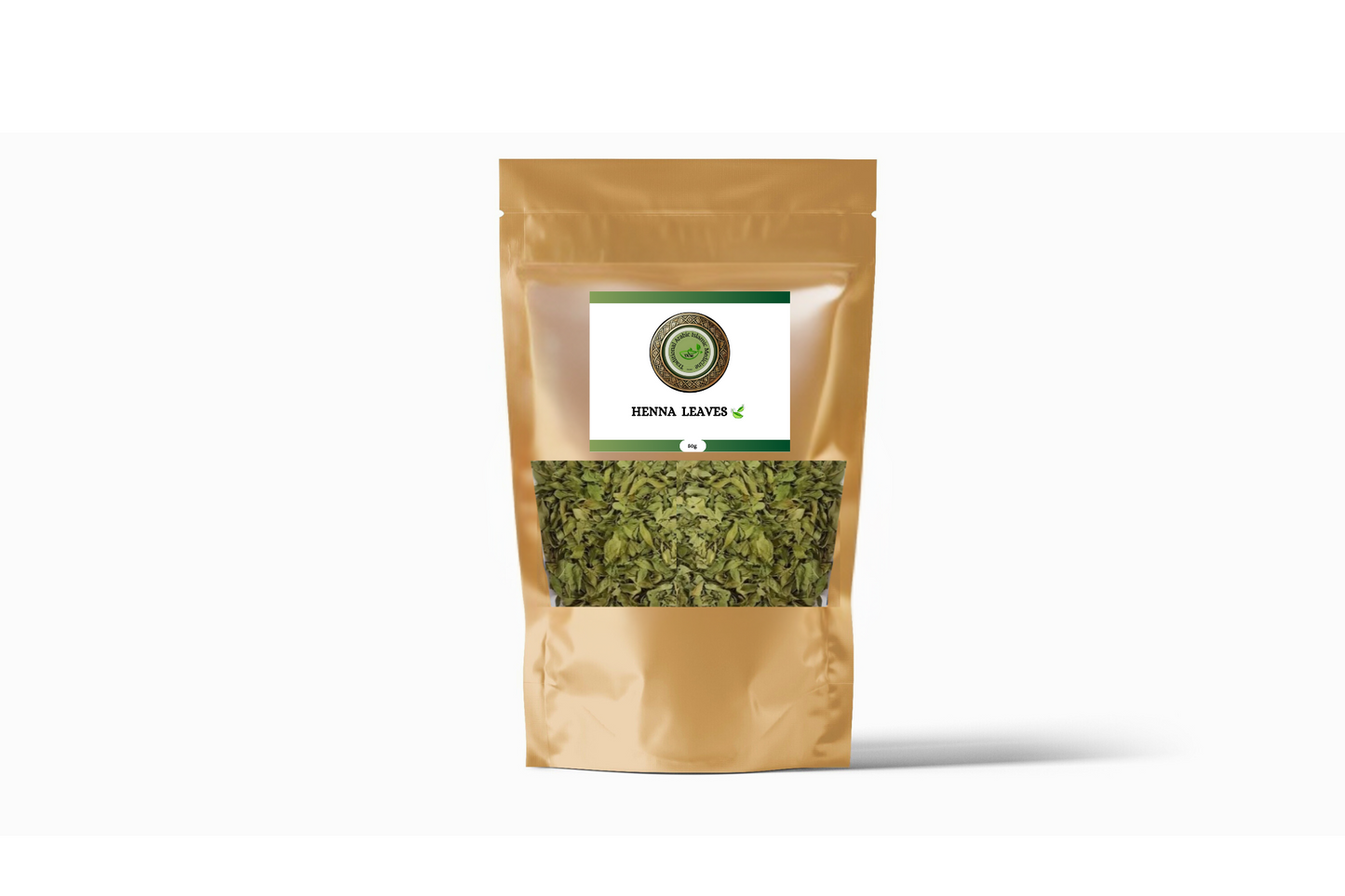
Henna Leaves
Henna Leaves
Couldn't load pickup availability
Henna leaves, widely known for their external uses, have proven to offer significant healing properties when used for internal health conditions. Derived from nature, dried Henna leaves provide remedies for several ailments when used correctly and combined with other natural ingredients.
Applications of Dried Henna Leaves
1. Internal Ailments
Herpes Simplex: Henna powder dries vesicles, prevents ulceration and secondary infection, and promotes early healing.
Ulcers and Internal Wounds: Its cooling and coagulating properties aid in healing internal wounds, including duodenal ulcers.
Damaged Liver and Kidneys: Henna combined with Kalonji (blackseed) has shown promising results in reducing symptoms of nephrotic syndrome, protein leakage, and inflammation.
Heavy Menstruation: Its cold and dry properties help regulate excessive menstrual bleeding.
Piles: Acts as an anti-inflammatory and cooling agent for internal healing.
2. External Ailments
Nose Bleeds (Epistaxis):
For anterior nosebleeds, powdered Henna applied directly to the bleeding site effectively stops bleeding.
For posterior nosebleeds, sniffing Henna powder reaches the bleeding area and seals it, often eliminating the need for invasive procedures like nasal packing.
Burns: When applied as a paste or powder to first or second-degree burns, Henna:
Reduces pain and fluid loss.
Prevents infections due to its antimicrobial properties
Promotes healing by adhering to the wound until recovery.
Herpes Simplex: Applied directly, Henna prevents ulceration, crust formation, and secondary infections, showing significant antiviral potential.
Additional Benefits
Anti-Hemorrhagic Properties: Henna’s coagulating effects can stop bleeding in wounds and ulcers.
Antiviral Potential: Promising for treating viral infections, including herpes and possibly even AIDS, due to its safe and natural composition.
Cold and Dry Nature: This unique property makes Henna effective for reducing internal heat, healing inflammation, and purifying blood.
Preparation and Usage
Henna Water (Internal Use)
Ingredients: A handful of dried Henna leaves (not powdered).
Instructions:
1. Soak the leaves in 1 liter of water overnight.
2. Strain the water in the morning.
3. Drink it throughout the day on an empty stomach for up to 10 days.
4. Follow with a 2-hour fasting period before breakfast.
External Use
For wounds and burns: Apply dry Henna powder directly to the affected area and cover with a bandage.
For herpes and similar conditions: Apply Henna powder directly to the affected site.
Complementary Ingredients
Henna is often combined with Kalonji (blackseed), which enhances its healing properties. A strict, clean diet (such as soups, oats, barley, and olive oil) further supports Henna’s efficacy.
Precautions
Avoid powdered Henna intended for cosmetic use, as it may contain dyes and contaminants.
Henna is cold-natured; avoid overuse, especially for extended periods.